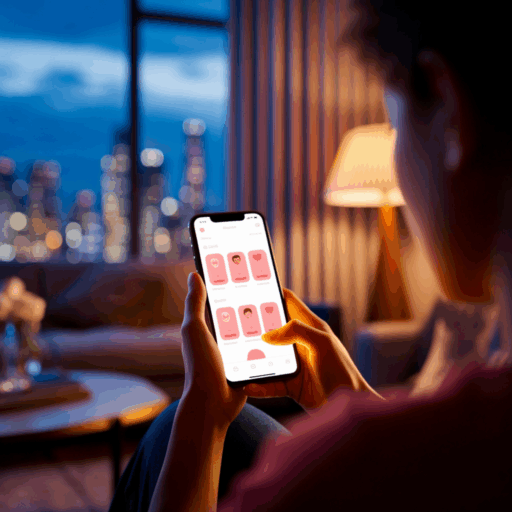
If you’ve ever found yourself endlessly scrolling through faces on a dating app, you’re part of a massive global phenomenon. It can feel like a game, a chore, or a thrilling hunt, sometimes all within the same five minutes. This digital ritual has completely reshaped how we meet people, but have you ever stopped to wonder what’s really going on in your brain with every left or right swipe?
The experience is far from random; it’s a carefully designed process that taps into deep-seated psychological triggers. Understanding the science behind the swipe isn’t just a fascinating exercise—it’s the key to navigating this landscape more effectively and, ultimately, making your own profile one that genuinely connects with others instead of just getting lost in the shuffle.
The Instant Gratification Engine: Why We Swipe
At its core, the swiping mechanism is a masterclass in behavioral psychology. It’s designed to be simple, addictive, and to keep you coming back for more, often without you even realizing why. The forces at play are powerful and tap into fundamental human drives for reward and validation.
The Dopamine Loop: Swiping as a Slot Machine
Every time you swipe, you’re pulling the lever on a digital slot machine. Most swipes result in nothing—a “loss.” But every so often, you get a match, and your brain gets a hit of dopamine, the neurotransmitter associated with pleasure and reward. This is known as a variable-ratio reward schedule, the same principle that makes slot machines and social media notifications so addictive. Because you don’t know when the reward (a match) will come, you’re compelled to keep swiping in anticipation of the next “win.” This creates a powerful feedback loop that can keep users engaged for hours.
Cognitive Overload and the Paradox of Choice
While having endless options seems like a good thing, it often leads to a phenomenon known as the paradox of choice. When presented with too many potential partners, our brains become overwhelmed. This cognitive overload can lead to decision fatigue, making it harder to choose anyone at all. It can also lead to less satisfaction with the choices we do make, as we’re constantly wondering if a “better” option was just one more swipe away. Apps become less about finding a person and more about finding the “perfect” person, an impossible and paralyzing standard.
First Impressions in Milliseconds: The Snap Judgments We Make
On a dating app, you don’t have five minutes to make a first impression; you have less than a second. Our brains are wired to make incredibly fast judgments based on limited information, a survival skill from our evolutionary past. In the digital world, this means your photos and a short bio are subjected to intense, subconscious scrutiny.
What Your Brain Processes in the First Swipe
The visual cues in your profile photos are interpreted almost instantly. Understanding these subconscious signals is crucial for curating a profile that communicates what you intend.
| Visual Cue | Subconscious Interpretation |
|---|---|
| A genuine, full smile | Warmth, friendliness, and emotional availability. |
| Direct eye contact with the camera | Confidence, honesty, and trustworthiness. |
| High-quality, clear photos | Effort, seriousness about dating, and self-respect. |
| Photos showing hobbies/passions | A well-rounded, interesting personality with a life outside the app. |
| Group photos (used sparingly) | Social proof, friendliness, and an active social life. |
The Halo Effect in Action
The halo effect is a cognitive bias where our overall impression of a person is influenced by a single positive trait. On dating apps, this trait is almost always physical attractiveness. If someone finds your primary photo appealing, they are more likely to assume you possess other positive qualities, such as being kind, funny, or intelligent, and may be more forgiving of a less-than-perfect bio. This makes your lead photo the single most important element of your entire profile.
Crafting a Profile That Breaks the Mold
Given the rapid-fire nature of swiping, standing out requires being intentional. The goal is to interrupt the user’s monotonous swiping pattern and give them a reason to pause, read, and engage. This is achieved through a combination of strategic photo selection and a thoughtfully written bio.
Moving Beyond the Clichés
Profiles filled with generic phrases are immediately forgettable. Statements like “I love to travel,” “I’m fluent in sarcasm,” or “just ask” blend into a sea of sameness. The key is specificity. Instead of saying you love to travel, mention the best meal you had in Italy or the time you got lost hiking in Peru. Specific details are memorable and create conversation starters.

Actionable Profile Tips to Spark Curiosity
- Show, Don’t Just Tell: Instead of writing “I’m adventurous,” show a photo of you rock climbing or kayaking. Instead of saying “I have a great sense of humor,” write a genuinely witty one-liner in your bio.
- Use High-Quality Photos: Your photos should be clear, recent, and show you in a variety of settings. Include a headshot, a full-body shot, and photos that reveal your hobbies and personality.
- Write a Bio That Asks a Question: End your bio with an engaging question to make it easy for someone to start a conversation. For example, “What’s the best concert you’ve ever been to?” or “Debate me: is a hot dog a sandwich?”
- Avoid Negativity: Your profile is not the place to list your grievances or what you don’t want in a partner. Focus on positivity and what you do bring to the table. It makes you appear more confident and approachable.
The Post-Match Psychology: From Swipe to Conversation
Getting a match is only the first step. The transition from match to meaningful conversation is where many potential connections fizzle out. Understanding the psychology of opening lines and maintaining momentum is critical.
Escaping the “Hey” Trap
Generic openers like “hey,” “hi,” or “what’s up?” fail because they lack effort and personality. They place the burden of starting an interesting conversation entirely on the recipient. A successful opener demonstrates that you’ve actually looked at their profile and are genuinely interested in them as an individual.
Referencing a specific photo, prompt, or detail from their bio shows you’ve paid attention. It’s a low-pressure way to start a personalized conversation that immediately sets you apart from the countless other “heys” in their inbox. This is where communication strategies that show active interest can be highly effective.
Opener Strategies: Effective vs. Ineffective
- Ineffective: “Hey”
- Why it fails: Zero effort, generic, places all conversational pressure on the other person.
- Ineffective: “You’re hot”
- Why it fails: While a compliment, it’s superficial and gives them nothing to respond to besides “thanks.”
- Effective: “That picture of you in front of the Eiffel Tower is incredible! Did you go to the top?”
- Why it works: It’s specific, complimentary, and ends with a simple, open-ended question.
- Effective: “I see you’re a dog person. My golden retriever and I formally challenge you and your pup to a park-off.”
- Why it works: It’s playful, references a shared interest, and showcases personality.
Conclusion: Hacking the System by Being Human
The world of online dating is governed by powerful psychological principles, from the dopamine-driven swiping mechanism to the snap judgments of the halo effect. But you don’t have to be a passive participant in this digital game. By understanding these forces, you can craft a profile that is authentic, engaging, and designed to attract the right kind of attention.
Ultimately, the best way to stand out is to move beyond the tropes and showcase your genuine personality. Use specific details, high-quality photos that tell a story, and conversation starters that invite a real response. By applying a little strategic insight into the psychology of dating apps, you can transform your experience from one of endless, frustrating swiping into one of meaningful connection.