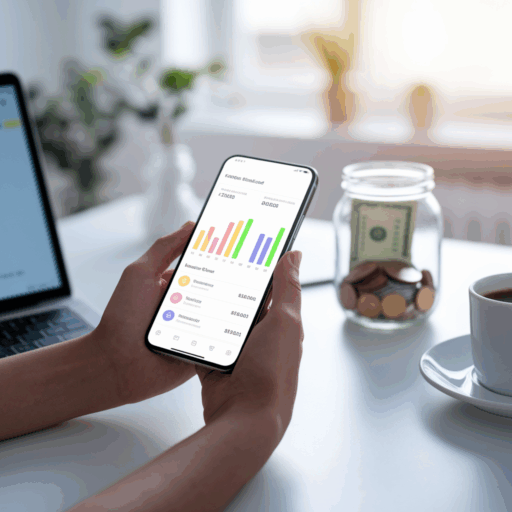
In today’s fast-paced world, keeping a tight grip on your finances can feel like a full-time job. Between managing bills, tracking expenses, and trying to set money aside for the future, it’s easy to feel overwhelmed. The goal of building a substantial savings account can seem distant when you’re just trying to keep up with daily costs.
Fortunately, technology has put powerful financial management tools right into our pockets. You no longer need complex spreadsheets or expensive financial advisors to get started. A new wave of free, intuitive applications can automate, simplify, and supercharge your savings strategy, helping you take control of your financial destiny one tap at a time.
Understanding Your Financial Health: The First Step to Saving
Before you can effectively boost your savings, you need a clear picture of where your money is going. Many people are surprised to learn how much they spend on non-essentials like subscriptions, dining out, or impulse purchases. A good financial app provides this clarity, acting as a personal finance dashboard that transforms complex data into simple, actionable insights. Here are the top free applications designed to help you do just that.
1. Empower Personal Dashboard (Formerly Personal Capital)
Empower offers one of the most comprehensive free financial dashboards available. By linking all your financial accounts—checking, savings, credit cards, loans, and investments—it provides a real-time, 360-degree view of your entire net worth.
Key Features:
- Net Worth Tracker: See all your assets and liabilities in one place to understand your true financial position.
- Budgeting Tools: Track your income and expenses, categorizing spending automatically to identify areas where you can cut back.
- Retirement Planner: A powerful free tool that analyzes your current savings and investments to see if you’re on track for retirement.
Best For:
Individuals who want a high-level overview of their entire financial portfolio, especially those with investments to track.
2. Rocket Money (Formerly Truebill)
If you suspect “subscription creep” is draining your bank account, Rocket Money is your secret weapon. Its primary function is to identify all your recurring subscriptions and make it incredibly easy to cancel the ones you no longer need, often with just a single click within the app.
Key Features:
- Subscription Management: Automatically finds all recurring charges, from streaming services to gym memberships.
- Bill Negotiation: The service can negotiate bills like cable, internet, and cell phone on your behalf to get you a lower rate (they take a percentage of the savings as a fee).
- Smart Savings Account: An optional feature that automatically sets aside small amounts of money for you.
Best For:
Anyone who wants to plug leaks in their budget by cutting unnecessary recurring expenses.
3. PocketGuard
PocketGuard simplifies budgeting down to one essential question: “How much is in my pocket for spending?” After connecting your accounts, it calculates your income, tracks your bills, and accounts for your savings goals. The remaining amount is what you can safely spend.
Key Features:
- “In My Pocket” Feature: Provides a simple, real-time number for your disposable income, preventing overspending.
- Automated Budgeting: Creates a personalized budget based on your spending habits.
- Goal Tracking: Helps you set and monitor progress toward specific savings goals, like a vacation or a down payment.
Best For:
People who feel overwhelmed by traditional, line-item budgeting and want a straightforward approach to managing daily spending.
4. Goodbudget
Based on the time-tested envelope budgeting system, Goodbudget is perfect for the proactive planner. Instead of just tracking past spending, you proactively allocate your income into digital “envelopes” for different categories (e.g., groceries, rent, entertainment).
Key Features:
- Digital Envelope System: Actively portion out your money for planned expenses, which helps curb impulsive spending.
- Sync Across Devices: Share a budget with a partner, with changes syncing in real-time on both phones.
- Debt Tracking: Helps you create and stick to a plan to pay down your debts.
Best For:
Couples, families, or individuals who prefer a hands-on, disciplined approach to budgeting.
5. Credit Karma
While not a direct savings app, understanding and improving your credit score is a crucial part of long-term financial health. A higher credit score means lower interest rates on loans, mortgages, and credit cards, which can save you thousands of dollars over time. Credit Karma provides free access to your scores from two of the three major credit bureaus.
Key Features:
- Free Credit Scores & Reports: Access your VantageScore 3.0 scores from TransUnion and Equifax anytime.
- Credit Monitoring: Get alerts when important changes happen on your credit reports.
- Financial Insights: Offers personalized recommendations for credit cards and loans based on your credit profile.
Best For:
Everyone. Monitoring your credit is a fundamental financial habit for anyone in the United States.
6. Digit
Digit is a master of “microsaving.” It’s designed for those who struggle to save money consciously. The app connects to your bank account, analyzes your income and spending patterns, and then automatically transfers small, safe amounts of money from your checking to your Digit savings account.
Key Features:
- Automated Savings: The algorithm saves for you, so you build a nest egg without thinking about it.
- Goal-Setting: You can create unlimited savings goals, and Digit will intelligently save for them.
- Overdraft Prevention: Digit guarantees it will never cause an overdraft.
Best For:
People who want to “set it and forget it” and save money without feeling the impact on their daily budget.
7. Fidelity
For those ready to take the next step beyond just saving, the Fidelity app provides a gateway to investing with no account fees or minimums. While it’s a full-service brokerage, its app is incredibly user-friendly for beginners who want their savings to grow and work harder for them.
Key Features:
- Fee-Free Investing: Trade U.S. stocks and ETFs with $0 commission. They also offer zero-expense-ratio index funds.
- Fractional Shares: You can invest in big-name companies with as little as $1.
- Educational Resources: A wealth of articles, videos, and webinars to help you learn about investing.
Best For:
Beginners who are ready to move from saving to investing and want a trusted, low-cost platform.
Comparative Overview of Top Financial Apps
| Application | Primary Function | Ideal User |
|---|---|---|
| Empower Personal Dashboard | Net Worth & Investment Tracking | The holistic financial planner |
| Rocket Money | Subscription Cancellation & Bill Management | The budget leak stopper |
| PocketGuard | Simplified Daily Spending Control | The overwhelmed budgeter |
| Goodbudget | Proactive Envelope Budgeting | The hands-on planner |
Choosing the Right Financial App for You
The best financial application is ultimately the one you will consistently use. There’s no single perfect solution for everyone. Consider your primary goal: do you need a high-level overview (Empower), help with overspending (PocketGuard), a disciplined plan (Goodbudget), or an automated way to save (Digit)?
Start by choosing one app from this list that aligns with your most pressing financial need. Link your accounts, explore its features for a few weeks, and see how it impacts your habits. Taking this small step can create significant momentum, transforming how you manage money and accelerating your journey toward financial freedom. To further empower your journey, consider exploring the resources provided by government entities that offer unbiased guidance on free financial applications to boost your savings.