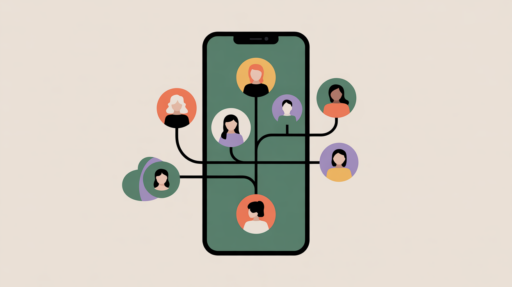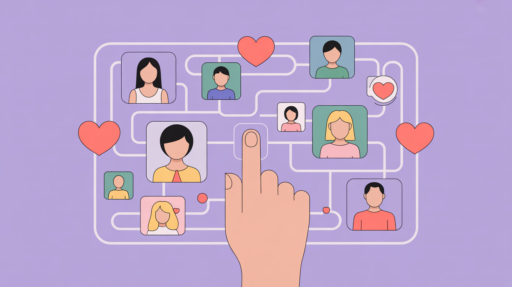
The endless swiping, the ghosting, the profiles that look great but lead to dates with zero chemistry—if you’ve spent any time in the world of online dating, this probably sounds familiar. The initial promise of a vast digital sea of potential partners has, for many, turned into a sea of fatigue and frustration.
But what if the solution isn’t more swiping, but smarter swiping? Enter Artificial Intelligence. As we speed towards 2026, AI is no longer a futuristic buzzword; it’s actively reshaping the digital search for a soulmate. The question is no longer *if* AI is involved, but how deep its influence will go, and whether its complex algorithms can genuinely decode the most elusive human emotion: love.
The Current State of Swiping: How AI Already Shapes Your Matches
Before we look to the future, it’s crucial to understand that AI is already the invisible hand guiding your thumb. For years, dating apps have used machine learning, a subset of AI, to move beyond simple filters like age and location. The goal is to learn your “type” without you ever having to explicitly state it.
These algorithms work silently in the background, analyzing thousands of data points to predict compatibility. They track which profiles you linger on, who you swipe right on, who you actually message, and even the sentiment of your conversations. This intricate dance of data helps platforms curate a more personalized feed, pushing profiles to the top that they believe you’ll find attractive and are likely to engage with.
Beyond the Basics: From Behavior Analysis to Photo Selection
Today’s more advanced systems go even further. Some platforms use AI to:
- Analyze Photos: AI can identify elements in photos you seem to prefer—like someone who is outdoorsy, has a pet, or is pictured in a social setting—and show you more profiles with similar visual cues.
- Prompt a Connection: Apps like Hinge use algorithms to identify “Most Compatible” matches and provide conversation-starting prompts based on shared interests or unique profile details.
- Filter Out Fakes: AI is a frontline soldier in the war against catfishing and spam accounts, using image verification and behavior pattern recognition to keep the user base more authentic.
While impressive, this is largely a reactive system. It learns from your past choices. The real revolution is what happens when AI becomes proactive, shaping your dating journey from start to finish.
The Next Frontier: What Dating Apps in 2026 Might Look Like
The leap from today’s AI to the AI of 2026 will be significant. We’re moving from simple pattern matching to a more holistic, predictive, and interactive experience. The focus will shift from just finding you a match to helping you build a genuine connection.
Generative AI: Your Personal Wingman and Profile Ghostwriter
Struggling to write a bio that’s witty but not trying too hard? By 2026, generative AI, similar to the technology behind ChatGPT, will be fully integrated. Imagine an AI that can:
- Craft Your Profile: Analyze your photos and a few key details about your personality to write a compelling, authentic-sounding bio for you.
- Break the Ice: Suggest personalized, clever opening lines for your matches based on a deep analysis of their profile, saving you from the dreaded “Hey.”
- Help You Keep the Conversation Going: If a chat stalls, the AI could offer subtle prompts or interesting questions to help you re-engage your match in a meaningful way.
The Rise of the AI Dating Coach
Perhaps the most transformative change will be the emergence of the AI dating coach. This digital companion would offer personalized guidance throughout your entire dating journey. It could analyze your interaction patterns and provide constructive feedback, like, “You tend to ask a lot of questions but not share much about yourself,” or “Your last three conversations ended after you brought up [a specific topic].” This coach could even simulate mock-date conversations to help you build confidence and refine your communication skills before the real thing.
The Double-Edged Sword: AI’s Promises vs. Potential Pitfalls
While the future looks incredibly promising, a fully AI-driven dating world isn’t without its challenges. The efficiency it promises could come at the cost of serendipity, and deeper personalization raises serious questions about data privacy and algorithmic bias.

| The Promise of AI in Dating | The Potential Pitfalls |
|---|---|
| Hyper-Personalization: Matches based on deep compatibility metrics, including communication style and life goals. | Algorithmic Bias: AI learning from existing data could unintentionally perpetuate societal biases related to race, body type, or background. |
| Increased Efficiency: Less time wasted on incompatible matches and dead-end conversations. | Loss of Serendipity: The magic of meeting someone completely unexpected could be engineered out of existence. |
| Confidence Building: AI coaches can help users improve their profiles and conversational skills. | Privacy Concerns: Apps would require access to even more personal data to function effectively, raising security risks. |
| Enhanced Safety: More sophisticated tools to weed out scammers, bots, and malicious users. | Inauthenticity: If everyone uses AI to write profiles and messages, are you connecting with a person or their optimized bot? |
So, Can an Algorithm Genuinely Lead to Love?
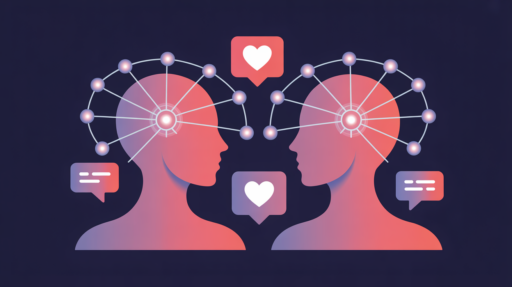
This is the billion-dollar question. An algorithm, no matter how advanced, is a tool for connection, not a creator of it. It can significantly increase the probability of you meeting someone with whom you share a deep, fundamental compatibility. It can remove much of the friction and guesswork that makes modern dating so exhausting, especially when using the best dating apps available.
By 2026, AI will be able to analyze your values, your communication style from text interactions, and even your long-term goals to present you with partners who aren’t just a good match on paper, but a good match in practice. It can tee up the perfect introduction. For those seeking serious, long-term commitment, this level of pre-screening could be revolutionary, especially on apps designed for marriage.
However, AI cannot replicate the spark of an in-person meeting. It can’t feel the easy laughter over a shared joke, the comfort of a knowing glance, or the intangible chemistry that ignites a true romance. The technology can open the door and introduce you to the person on the other side, but you are the one who has to walk through it. Ultimately, the success of any match, whether in a detailed comparison of Hinge vs. Bumble or any other platform, still hinges on human factors: vulnerability, effort, and a willingness to build a connection beyond the screen.
Final Thoughts: Embracing AI as a Tool, Not a Cupid
Looking ahead to 2026, AI in dating apps won’t be a magic bullet that finds you “The One” while you sit back and watch. Instead, it will be an incredibly sophisticated and intelligent co-pilot on your dating journey. It will handle the logistics, filter out the noise, and provide you with data-driven insights to help you put your best foot forward.
The algorithm can’t feel love, but it can create the optimal conditions for love to blossom. By taking care of the compatibility checks and logistical hurdles, AI will free up our most valuable resource: the emotional energy to invest in the right people. So, can an algorithm find you love? No. But it can give you the best possible chance of finding it yourself.